




Picture this. Today might be the day you finally buy your dream bike. And somewhere in the back of your head there’s that question: did I choose the right one? Will this bike actually match what I want to ride? Totally normal. You read forums, compare specs, watch videos. That’s where I step in. Let’s break it down clearly:
BMX vs Dirt Jump – what’s the difference and which bike should you choose for street, pumptrack and jumps?
Not sure whether to go for a BMX or a Dirt Jump bike? This is one of the most common questions before buying your first trick or jump bike. The difference is not just about looks. Geometry, wheel size and intended use are completely different. Here’s a clear comparison.
Key differences, BMX vs Dirt Jump
| Feature | BMX | Dirt Jump |
|---|---|---|
| Wheel size | 12”, 14”, 16”, 18”, most commonly 20” | Most commonly 26” |
| Frame sizing | Mainly chosen by top tube length | Usually one size, geometry and body proportions matter |
| Suspension | No | Front suspension fork |
| High-speed stability | Medium | High |
| Agility | Very high | High |
| Best for | Street, skatepark, technical tricks | Pumptrack, dirt jumps, bigger airs and landings |
BMX bikes come in different wheel sizes, but 20” is the most common for freestyle riding. Dirt Jump bikes are typically 26”.
Which one is better for street riding?
If you ride mainly street and skatepark, BMX is usually the better choice. The compact geometry and 20” wheels make technical tricks, manuals and quick combos easier to control.
Which one works better on a pumptrack?
Dirt Jump bikes shine on pumptracks. Larger wheels and a suspension fork help maintain speed and flow. A BMX will work too, especially on smaller tracks, but at higher speeds a Dirt Jump bike feels more stable.
What about dirt jumps and bigger take-offs?
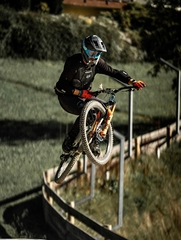
If you plan on regularly hitting dirt jumps and going bigger, a Dirt Jump bike gives you more stability and confidence on landings. BMX works great for smaller features and more technical riding.
Final thoughts, BMX or Dirt Jump?
BMX is smaller, more compact and built for street, skatepark and technical tricks. Dirt Jump bikes are bigger, with 26” wheels, and feel more stable at speed and in the air.
If you’re into grinds, manuals and creative street lines, BMX is your tool. If you want bigger jumps, smoother pumptrack flow and stronger landings, go with a Dirt Jump bike.
The most important thing is not what’s “better” on paper. It’s where you ride and what kind of riding actually excites you. Choose the bike that fits your style, not the one your friends happen to ride.
FAQ, BMX vs Dirt Jump
Is BMX or Dirt Jump better for beginners?
It depends on where you want to ride. For street and skatepark, BMX is often easier to start with. For pumptracks and dirt jumps, a Dirt Jump bike offers more stability.
Can you ride a Dirt Jump bike in the street?
Yes, but it’s not its main purpose. Dirt Jump bikes handle speed and jumps better, while BMX bikes are usually more responsive for technical street tricks.
Can you ride a BMX on a pumptrack?
Yes, especially on smaller pumptracks. On faster tracks with bigger rollers, a Dirt Jump bike typically feels more stable.
Which bike is more stable for bigger jumps?
Generally, a Dirt Jump bike. The 26” wheels and front suspension help with control in the air and on landings.
What rider height fits BMX and Dirt Jump bikes?
BMX sizing depends mainly on wheel size and top tube length. Dirt Jump bikes with 26” wheels typically fit riders around 155–185 cm, depending on geometry and body proportions.


