




Here I’ll show you the difference between a stunt scooter for skatepark riding and one for street riding.
And no, a street scooter is not the same as a classic kick scooter!
What’s the difference between a Stunt Park Scooter and a Stunt Street Scooter?
There are several differences.
1. Size of the stunt scooter.
- Street riders may prefer taller bars, but park and street scooter heights overlap.
- Compare total height, measured from the ground to the top of the bars. Use the model’s sizing advice as a starting point, then consider your proportions, stance and riding style.
2. Deck design.
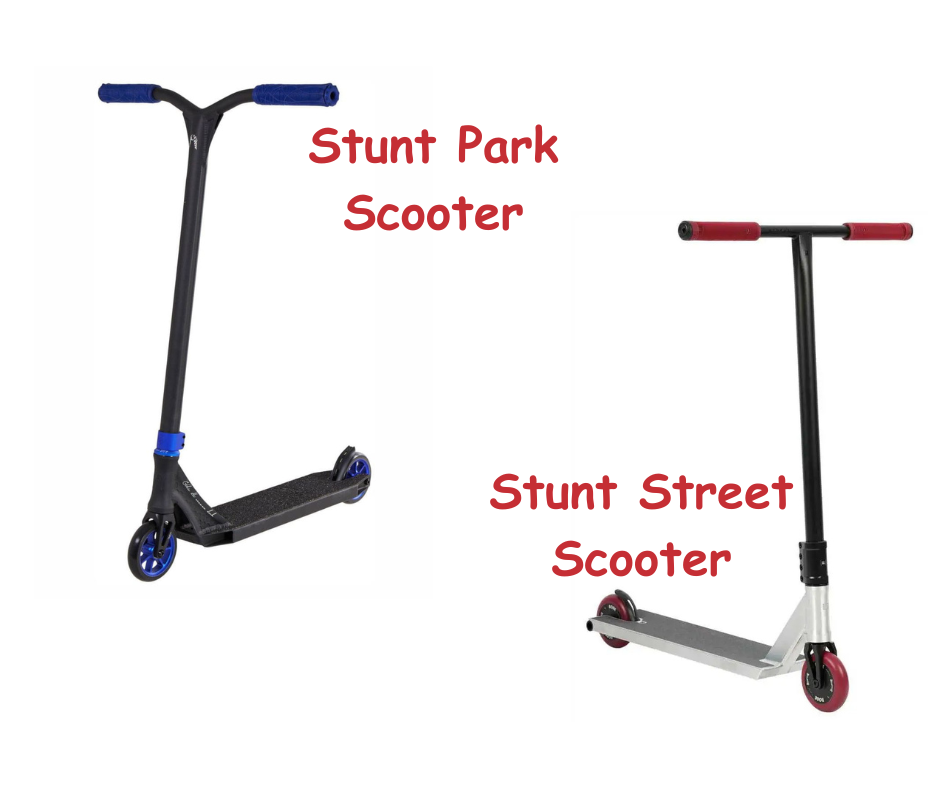
- A street deck is longer, bigger, wider, and has square edges.
- A park deck is smaller, narrower, with angled edges.
- In the skatepark, speed, maneuverability, and precision matter, so the deck has to be compact.
- On the street, distances between obstacles can be larger, so a bigger deck works better for longer grinds and rides.
- A wider deck can provide more space for grinds, but the street label alone does not guarantee greater strength.
- Both park and street riders need grip tape that provides secure footing and is in good condition.
- Choose a deck designed for your riding and check its dimensions and compatibility with the rest of the scooter.

3. Weight of the scooter.
- Weight varies between models, with overlap between park and street setups.
- Compare deck dimensions and the complete setup rather than treating extra weight as proof of stability.
- For aerial tricks, choose a deck size and weight that feel manageable for you; the smallest or lightest option is not automatically the best fit.
4. Scooter handlebars.
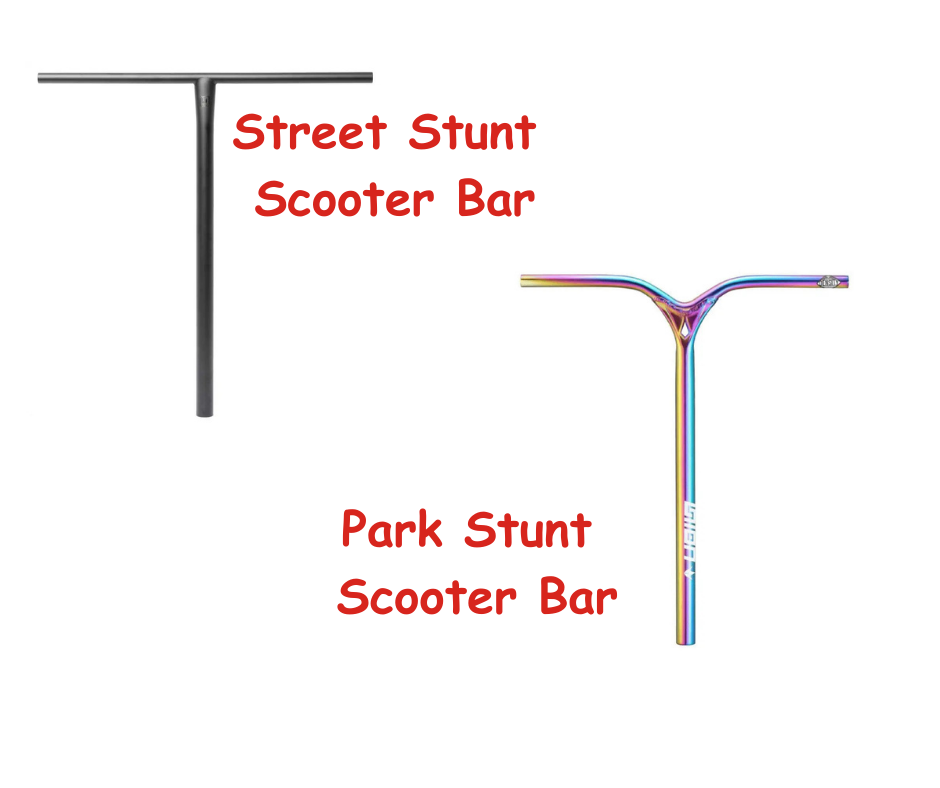
- T-bars and Y-bars are both used in stunt scootering. Compare bar height, width, material and compatibility rather than choosing by shape alone.
- Bar shape alone does not tell you whether a complete scooter is for park or street. Compare the whole setup in examples such as Blunt KOS S7, Triad Delinquent, or Aztek Fountain, rather than using T-bars or Y-bars as a fixed rule.
5. Scooter wheels.
Wheel sizes and hardness overlap across park and street setups. Choose for the surface, your riding and the exact scooter’s specifications. Before changing wheels, check their compatibility with the fork, deck and brake. More about scooter wheels you’ll find here.
In summary…
Main features of a park scooter
A park scooter should fit you and suit the tricks you want to practise. Compare deck dimensions, complete weight and how the setup handles. Lower weight is not automatically better, and material alone does not tell you a part’s quality or strength. Check the intended use and compatibility of the actual components.
Did you know the difference between riding in a skatepark and riding in the street?
In the skatepark, you have ramps and obstacles built for tricks. Moves are polished and precise, with shorter distances between obstacles. On the street, anything goes – ledges, benches, stairs, rails, curbs. Street tricks are rougher, tougher, and harder on the scooter.
Ride only where it is permitted and where the surface and obstacles suit your scooter’s intended use. Ordinary park and street scooters should not be assumed suitable for dirt jumps. Overall, stunt scooters are divided into park scooters, street scooters, and universal stunt scooters.
What are the benefits of riding a stunt scooter?
It’s fun, but also a sport that improves your fitness, focus, balance, and coordination. Riding a scooter also teaches patience, how to handle failure, resilience to pain, and quick reflexes.
What is a stunt scooter and how is it different from a kick scooter?
You probably know by now – but if not, read more here…


