


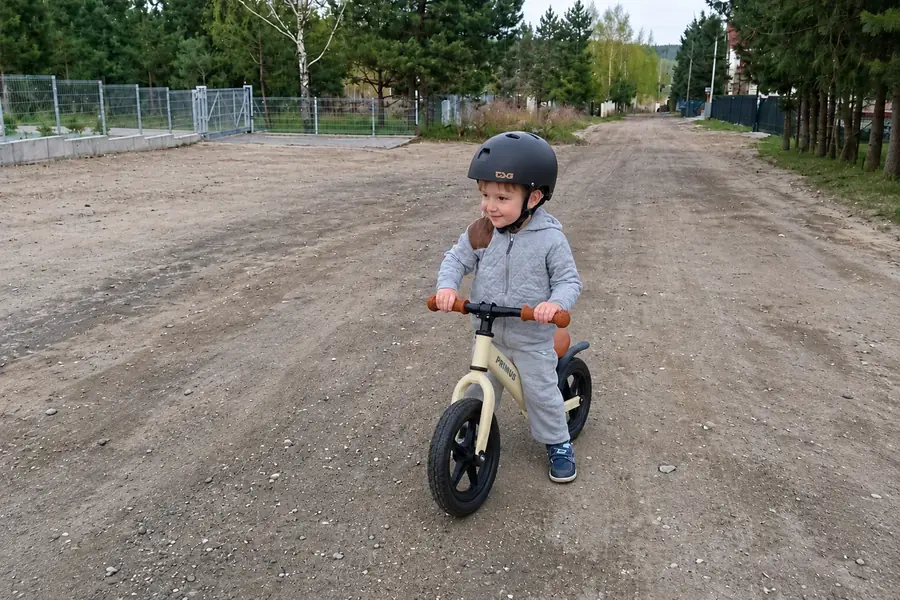
Image generated using AI.
Is a balance bike a good first bike?
You want your child to enjoy riding, but you’re wondering how they’ll get on. Will they fall at the first turn? Will the bike be too heavy? And is it worth buying one when they’ll need a pedal bike later?
A balance bike lets your child learn in stages. They can practise steering and balancing before adding pedalling. They don’t have to lift both feet or glide all the way down a path straight away. Those first small steps with the bike between their legs are part of learning too.
A lot depends on the fit of the bike, where you ride and whether your child is ready to try. Buying a balance bike doesn’t mean they’ll be riding off on their own the next day.
What can your child learn on a balance bike?
Each time they push along, your child practises controlling the bike: setting off, changing direction and stopping. In time, they may try short glides with their feet off the ground. They’re then keeping themselves upright through their own movements, without stabilisers providing support.
That experience can help when they move to pedals. Steering and balancing are already familiar, although they still need to learn to pedal, set off and use the brakes on their new bike.
There’s an everyday benefit for you too: another way to spend time outdoors together. You don’t need to organise a training session. Try a familiar, quiet path, have a few goes and head home when your child has had enough.
Does research support learning on a balance bike?
Studies suggest that starting on a balance bike may help children learn to ride a pedal bike. They don’t show that every child will learn by a particular age or after a set number of attempts.
In a 2022 study by Blommenstein and van der Kamp, 173 parents of children aged four to six answered questions about how their children had learnt to cycle. Children who had used balance bikes began riding independently at a younger age and had shorter learning periods than those who had used stabilisers.
This was a questionnaire study. It couldn’t fully separate the effect of the bike from other factors, such as how often children rode, parental support or when they started learning.
In another study, published online in 2023, Cristiana Mercê and colleagues compared two groups of children who couldn’t yet ride independently. There were 25 children, aged three to seven. One group started on balance bikes and the other on bikes with stabilisers. After six sessions, both moved to pedal bikes without additional support. The balance bike group needed fewer sessions to learn to set off, ride and brake independently.
That is a promising result, but it came from a small group taught by physical education teachers. Progress on family outings may look different.
A balance bike gives your child a chance to practise steering and balance before pedalling. Give them time to try, without setting a deadline for when they “should” be riding.
What age can a child start using a balance bike?
There isn’t one starting age that suits every child and every bike. Check the minimum age and guidance for the particular model. Your child’s ability to walk independently, the fit of the bike and their interest in riding matter too.
With the saddle adjusted, your child should be able to put both feet flat on the ground with their knees slightly bent. Their legs need room to push and support them. If they can only touch the ground with their toes, the bike is too big.
Don’t buy a larger model for them to grow into. At first, being able to put their feet down matters every time they try to set off or stop.
What if your child doesn’t want to ride?
Start by checking anything that could make the bike difficult to use: saddle height, weight and room to move. Your child may be interested but struggle to manage a bike that is too big or heavy.
Let them get to know it without planning a long ride. They might walk beside it, sit on it briefly or take a few steps. Keep the first attempts short, and take a break when they get tired or lose interest.
Don’t pull them along on the bike or push them up to speed to make them balance. If they don’t want to try, you can come back to it another time.
There’s no need to rush because a friend’s child is already riding. Check the fit, then let your child learn at their own pace.
What should you watch out for when riding?
Being able to put their feet down doesn’t remove the risk of falling. A child can lose balance, hit an obstacle or pick up more speed downhill than they can control.
For those first attempts, choose a flat, dry space away from cars, steep slopes and loose gravel. Stay close and practise stopping before they start covering longer distances.
A correctly fitted helmet should be fastened on every ride. Closed-toe shoes matter too, especially on a bike without a brake where the child stops with their feet. Choose suitable protective pads as well.
Before each ride, check that the handlebars, saddle and wheels are secure, and inspect the condition of the bike. Follow the manufacturer’s instructions for assembly and adjustment.
The American Academy of Pediatrics also highlights injuries caused by a handlebar hitting a child’s abdomen in a fall. If your child has abdominal pain or vomits after such an impact, seek medical advice. This guidance applies to cycling generally, not only balance bikes.
Is a balance bike right for every child?
A balance bike can be an enjoyable way to be active and practise riding. It doesn’t, by itself, treat movement difficulties or correct posture problems.
If your child has a diagnosed condition affecting movement or is receiving rehabilitation, discuss suitable activities and bike adjustments with the professional treating them. General advice can’t account for every child’s needs.
Which balance bike should you choose?
Start with fit, then compare weight, adjustment and wheels. A lighter bike is easier to push and pick up after a fall. Foam tyres don’t need inflating, while pneumatic tyres can offer more comfort on uneven paths.
Browse our balance bikes for children and check the guidance for each model. Their first bike should let them start exploring riding now, with easy access to the ground and room to move.
Parents’ questions about balance bikes
Will a balance bike help my child learn to pedal sooner?
It lets them practise steering and balance first, which may help with the move to pedals. Research supports that potential benefit, but doesn’t give a guaranteed learning time. Your child still needs to learn to pedal, set off and use the brakes on the new bike.
Is three too old to start on a balance bike?
No. A three-year-old can start on a balance bike too. Choose a model that meets the manufacturer’s guidance and lets your child push freely with both feet flat on the ground.
What if my child is scared of their balance bike?
Check the size and saddle height, then let them start by walking the bike and taking a few steps. Choose a quiet place and keep attempts short. Don’t push them up to speed or compare their progress with other children.
Sources used in this guide
- Blommenstein and van der Kamp (2022): a parent questionnaire study of children’s cycling development. DOI: 10.1111/bjdp.12409.
- Mercê and colleagues (published online in 2023): a comparison of balance bikes and bikes with stabilisers in a learning programme. DOI: 10.1080/17408989.2023.2185599.
- American Academy of Pediatrics: “Biking”, guidance on bike fit, protective equipment and cycling injuries.


